The Creative Process #47 - Cadence vs Cadenza
Finding the rhythm or striking like lightning

This month I turned 45. This felt like a suspiciously too-large number, suggestive of importance, but in the end, was just another one. I've not yet become a grump about my birthdays – how can you be down about cake, presents and love? My present from my family was a soft-serve ice-cream maker, which sparked a good bit of recipe exploration, tempered just slightly by my ancient wisdom that too much ice-cream is probably not good for you. A little bit, however... fantastic!
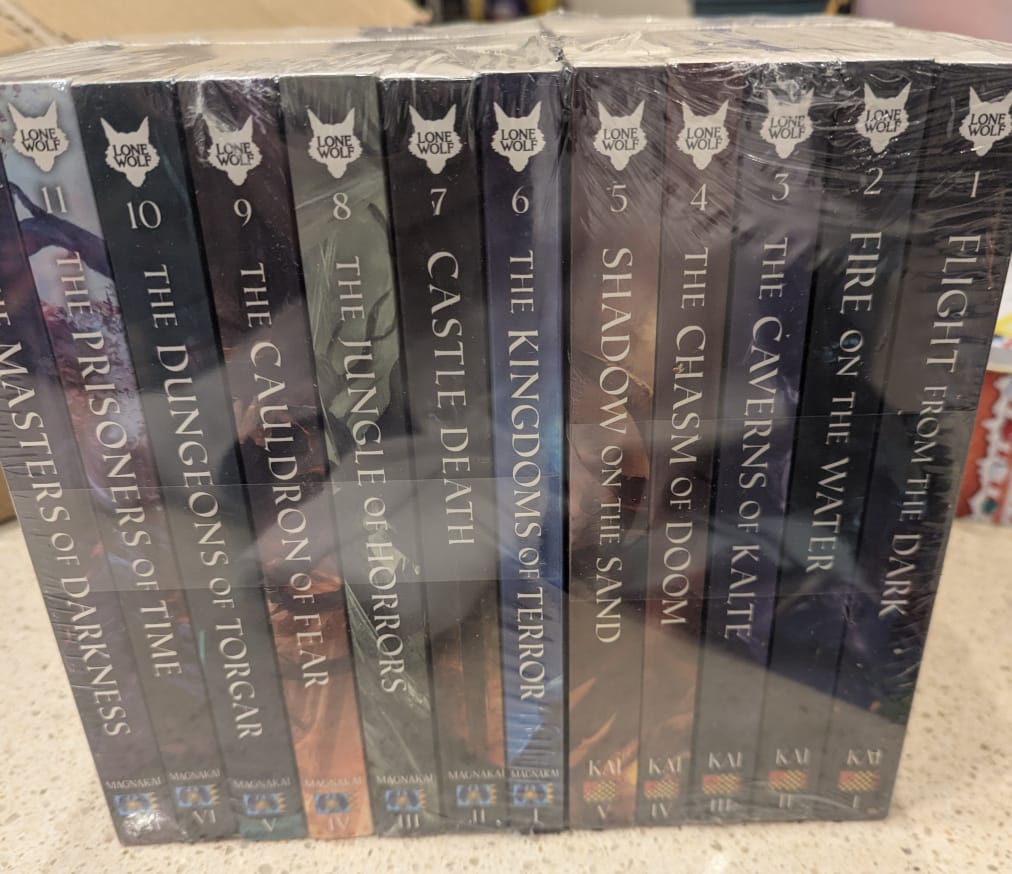
I'm not immune to nostalgia, though. I bought myself the set of revised Lone Wolf gamebooks (Kai to Magnakai), which I read as a kid. My excuse perhaps is research on how to write gamebooks, but really, I just loved those books and never got a chance to collect them all.
In April I had begun hunkering down for the winter, trying to get into a good rhythm for work, life and creative ventures. The month of May looked at that, laughed and kicked over the table. While I was trying to get my IF Study Course off the ground, I had an interstate work trip (on my birthday!), and then my wife had an interstate work trip and it was my turn to solo parent, and then I was work boss for a week, and then I was running a work course, and my daughter broke her arm, and we were trying to thread the needle on the next stages of development for my son without stressing him out, and so on and so on. Where I was hoping to get a nice cadence with the hope of creative space, I got only chaos.
In a way that I am familiar with but do not understand, my brain saw this frenetic mess and dialled up my creative enthusiasm exactly when I couldn't immediately act on it. At the start of the month I toyed with the idea of dropping most of my project ideas to find something fresh. At the end of the month, I was constantly generating ideas and insights about the very projects I was going to drop! It felt like the rest of my life was an orchestra bashing away at great volume, and then they'd stop and look over at my rare moment of quiet contemplation. In the silence my creative spirit would go, "Okay, let's rock!" The ideas it noodled away on might not actually end up as structural as I'd like, but it's fun and energising.
June might be another attempt to get back into a more structured creative rhythm. Although I don't want to say that out loud, or my calendar might explode.
I enjoyed my deep dive into the IF Comp winner Detritus. It was a superbly crafted experience and I've learned immensely from it. The author Ben Jackson is a top-notch bloke and has been both encouraging and thankful for my course's focus on his game. I hope to take his example of a game with tight structure but delightful freedom, and make my own.
The course continues to be mostly me working alone in the limelight, but I'm catching glimpses of it at least being read and having an impact elsewhere. Like I mentioned last month, my plan is to just keep on working and grow it over time.
If I get an open moment, I'm keen to start laying down foundations on projects. Ideas are great, but they are fairy floss.
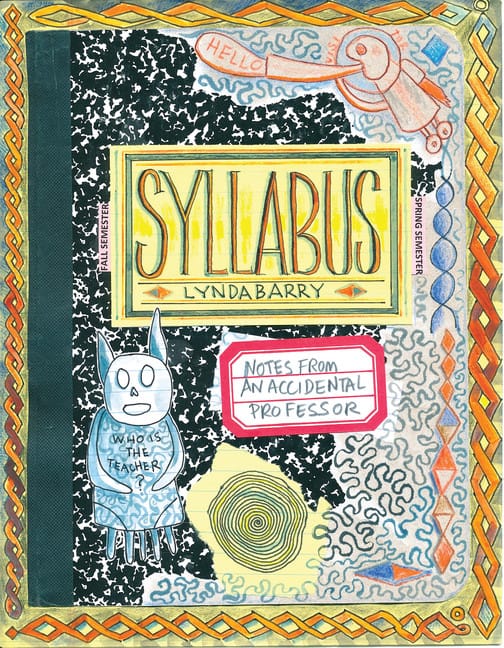
I have two book recommendations, gathered from the Neo-Interactives crew. The first is Lynda Barry's Syllabus. It's a wild book. Ostensibly it is a record of a writing course, but it's actually a densely illustrated collage of ideas about art, creativity, perspective, stories, contrasts, constraints and so much more. Flipping to a random page is a spike of creativity straight into your skull.
The second is a little more prescriptive: Good Writing by Neal Allen and Anne Lamott. It's subtitled (a requirement for all New York Times bestsellers): "36 Ways to Improve Your Sentences." In the past I have considered myself a decent writer, but this year I've determined to void that opinion and try to rebuild from the ground up. This book is exactly what it says on the cover – 36 rules of writing, accompanied by short essays on the idea. A number of them I've already laced deep in my writing DNA; I spent some time in my twenties learning about jokes and so "Rule 23: Give Your Sentence a Finale" is now reflexive. Others like "Rule 35: Finish The Damn Thing"... well, I've been working on that.
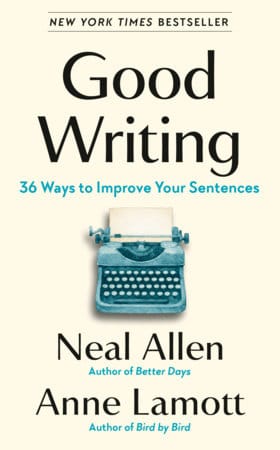
I bought the book less as new knowledge, but more as a reminder. In the editing phase of work, I can flip to a random rule and use it as a crucible. The two authors add an extra dimension by sometimes disagreeing with the rule, or taking it in a different direction. They might even have disagreed with it at a different stage in their career. To mangle the quote, the book is more what you'd call "guidelines" than actual rules, but they are useful all the same.
A sneaky surprise third recommendation is Doom and Bloom, by Campbell Walker (aka struthless on YouTube). It discusses the necessity of creativity in hellish times, and strategies to go about it. Very timely. It falls halfway between the other two recommendations: it's full of illustrations and ideas to excite, but is wordier than both Syllabus and Good Writing.
Recommend things that spark your wild creativity or creative discipline. What gives you that sugar rush of wanting to make things whenever you see it?